
Marengo County Projected Release
Projected release is not the same as actual release. In Alabama state-prison records, ADOC uses the field name "Minimum Release Date." ADOC defines that field as the earliest scheduled date an inmate can be released to probation or end of sentence. It can change. Disciplinary loss of good time, new cases, amended sentences, and circuit-clerk updates can all move the date.
For Marengo County jail custody, the same field does not exist. A person in the Marengo County Detention Center on a local matter may be released by bond, court order, time served, dismissal, transfer, or another agency hold. The proof is the sheriff's prisoner record and the court case, not an ADOC projected date.
Find a Marengo County Release Date
The best search path starts with the type of custody. Use Marengo County Sheriff's Office and the Circuit Clerk for a local jail sentence or pretrial case. Use ADOC while a person sentenced from Marengo County remains in state custody. If the person has already left ADOC, ADOC's public search may not show a historical record because the search is limited to currently incarcerated inmates.
Alabama Code Section 15-18-1 is the local-custody divider. When imprisonment or hard labor is 12 months or less, the sentence is served in the county jail or through county hard labor, and a misdemeanor prisoner is not sent to the penitentiary. For that kind of Marengo County sentence, the practical release-date record is the court sentence, any jail-credit entry, and the sheriff's release record. ADOC's Minimum Release Date does not control a local jail sentence that never entered ADOC custody.
- For Marengo County jail custody, ask the sheriff or jail for the public prisoner-book release fields, especially order and date of release.
- Check the Marengo County court case for bond orders, sentence, jail credit, probation orders, dismissal, revocation, or transfer entries.
- For state-prison custody, search ADOC's inmate search by AIS number when known, or by first and last name.
- Open the ADOC record and look for Minimum Release Date, jail credit, good time received or revoked, parole consideration date, and parole status.
- After release, use VNS, ABPP, the court case, or an ADOC records request because the public ADOC search is not a historical release archive.
The broader Marengo County released-inmate path remains on Home. This page focuses on the date calculation and why the date can change.
ADOC Minimum Release Date
ADOC's public inmate search is the right tool only while the person may still be in ADOC custody. The search supports AIS number, first name, and last name. ADOC says the AIS number takes precedence, and name results can be capped if too many matches appear. For a Marengo County case that became a prison sentence, the ADOC record connects back to the county through commit county, case number, jail credit, and sentence fields.
ADOC's definitions page identifies the fields that explain release timing.
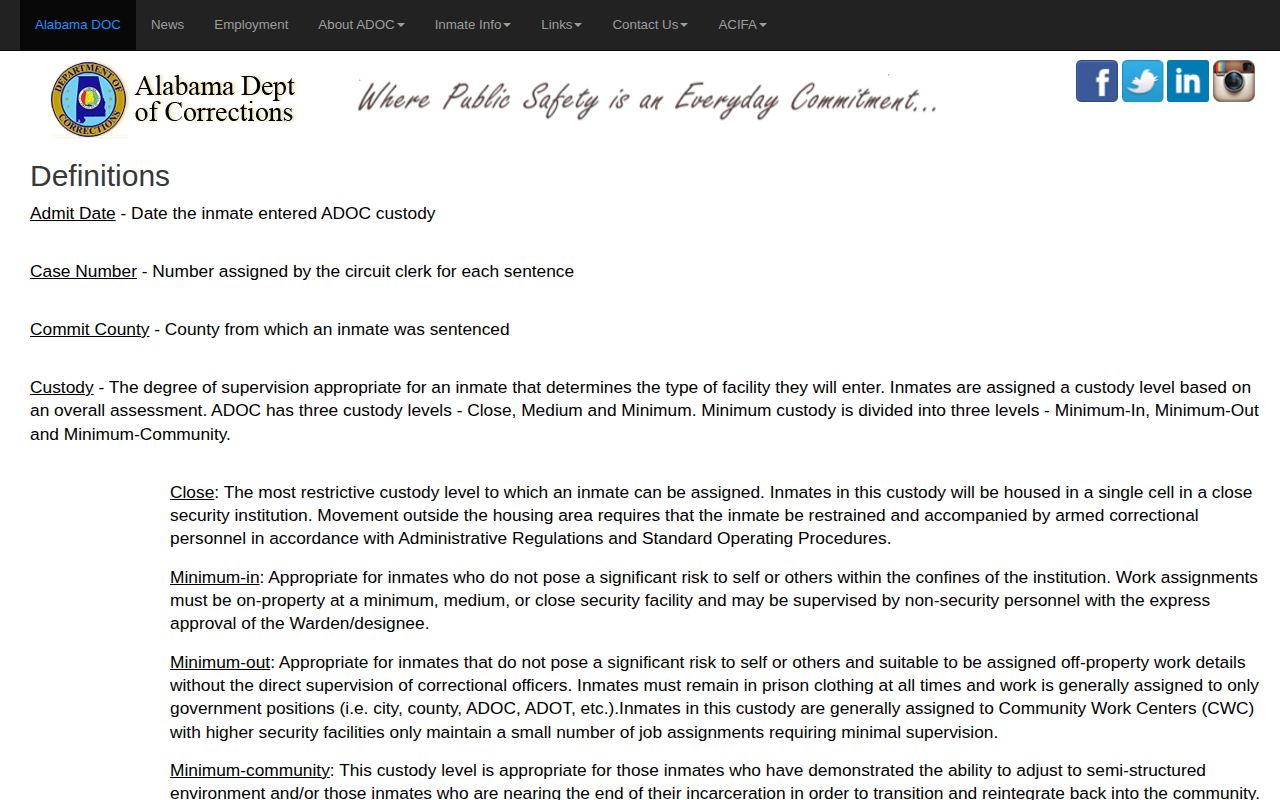
The definitions matter because Alabama's public field is Minimum Release Date, not a guaranteed final release date.
| ADOC field | Why it matters |
|---|---|
| Minimum Release Date | Earliest scheduled release to probation or end of sentence, subject to change. |
| Jail Credit | Time credited from county jail before sentencing, prepared by the sentencing county's circuit clerk. |
| Good Time Received / Revoked | Incentive-time credits or losses that can move the projected date. |
| Parole Consideration Date | Tentative parole-board timing, separate from final release. |
| Parole Status | Whether the person is on parole, delinquent, or revoked according to ADOC definitions. |
Alabama Good-Time Rules
Alabama correctional incentive time is governed by Alabama Code Section 14-9-41. The statute uses classes. Class I prisoners can earn 30 days for each 30 days actually served, Class II can earn 15 days for each 30 days, Class III can earn five days for each 30 days, and Class IV earns no correctional incentive time. The statute also includes exclusions, forfeiture, and restoration rules.
Do not reduce Alabama release-date work to a simple half-time estimate. Eligibility, class status, offense type, sentence length, discipline, and court updates matter. A Marengo County prisoner serving a short local sentence is a different case from a Marengo County defendant transferred to ADOC after sentencing.
The correctional incentive time statute is one of the key sources for Alabama projected release calculations.
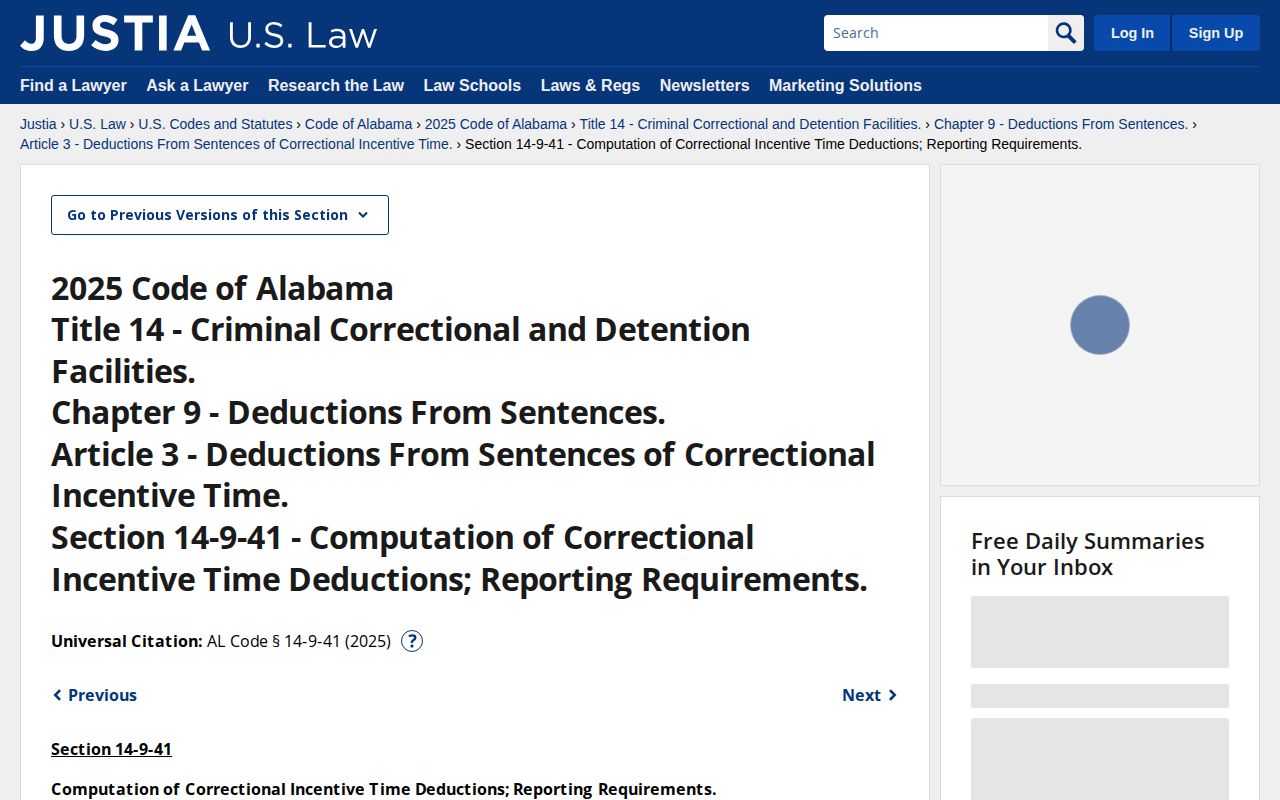
The statute explains why a date can move later if good time is revoked or if the person is not eligible for a credit class.
Marengo County Supervised Release Timing
Mandatory supervision can affect the way a state-prison release looks. Alabama Code Section 15-22-26.2 creates supervised-release windows for eligible ADOC prisoners before the release date. The research identified three windows: three to five months before release for sentences of five years or less, six to nine months for sentences of more than five but less than 10 years, and 10 to 12 months for sentences of 10 years or more. The statute excludes certain child sex offenses as defined in the cited law.
For Marengo County, this means a person can move from prison custody into ABPP supervision before the sentence is fully complete. That is why the Probation & Parole page and ABPP's Demopolis Field Office may become relevant after a projected release date is found.
Truth-in-sentencing should also be handled with care. Alabama Code Section 12-25-36 refers to voluntary truth-in-sentencing standards with minimum terms, extended terms, and post-release supervision when those standards are used. The safer Marengo County explanation is not a blanket percentage rule. The release date may involve Minimum Release Date, correctional incentive time, parole consideration, mandatory supervision, and the court's sentencing order.
Why Marengo Release Dates Change
Release dates are calculations built from court, jail, prison, and supervision data. The Marengo County Circuit Clerk may affect jail credit or sentence information. ADOC may adjust good-time values or process new sentence data. ABPP may grant parole but still need a home-plan verification and coordination with ADOC before physical release.
| Change | Effect on date |
|---|---|
| Jail credit update | Changes time served and can adjust a minimum release calculation. |
| Good-time loss | Can move the projected date later under Section 14-9-41. |
| New case or amended sentence | Can change the controlling sentence once the circuit clerk sends updates. |
| Parole grant | May lead to release after home-plan verification and ADOC coordination. |
| Detainer or hold | Can end one custody event while starting another agency custody event. |
| Record restrictions | Can limit what is visible online without changing the underlying event. |
Confirm a Marengo Release Date
Use a direct confirmation source before relying on any projected date. For a county-jail matter, contact Marengo County Sheriff's Office or review the court case. For an ADOC matter, check the current ADOC record while the person remains incarcerated and use ADOC records requests, VNS, and ABPP after release. Alabama VNS is for Alabama offenders convicted and sentenced to prison, while county pretrial matters are routed back to the sheriff and court.
VINELink and VNS can help with custody-status changes and release alerts, but a notification does not explain the full release authority. Use the VINELink Inmate Search page for the notification workflow. Note: A person may be released from Marengo County jail and still be held by another county, ADOC, federal authorities, or immigration custody.